
Understanding the Difference Between Front of House and Back of House
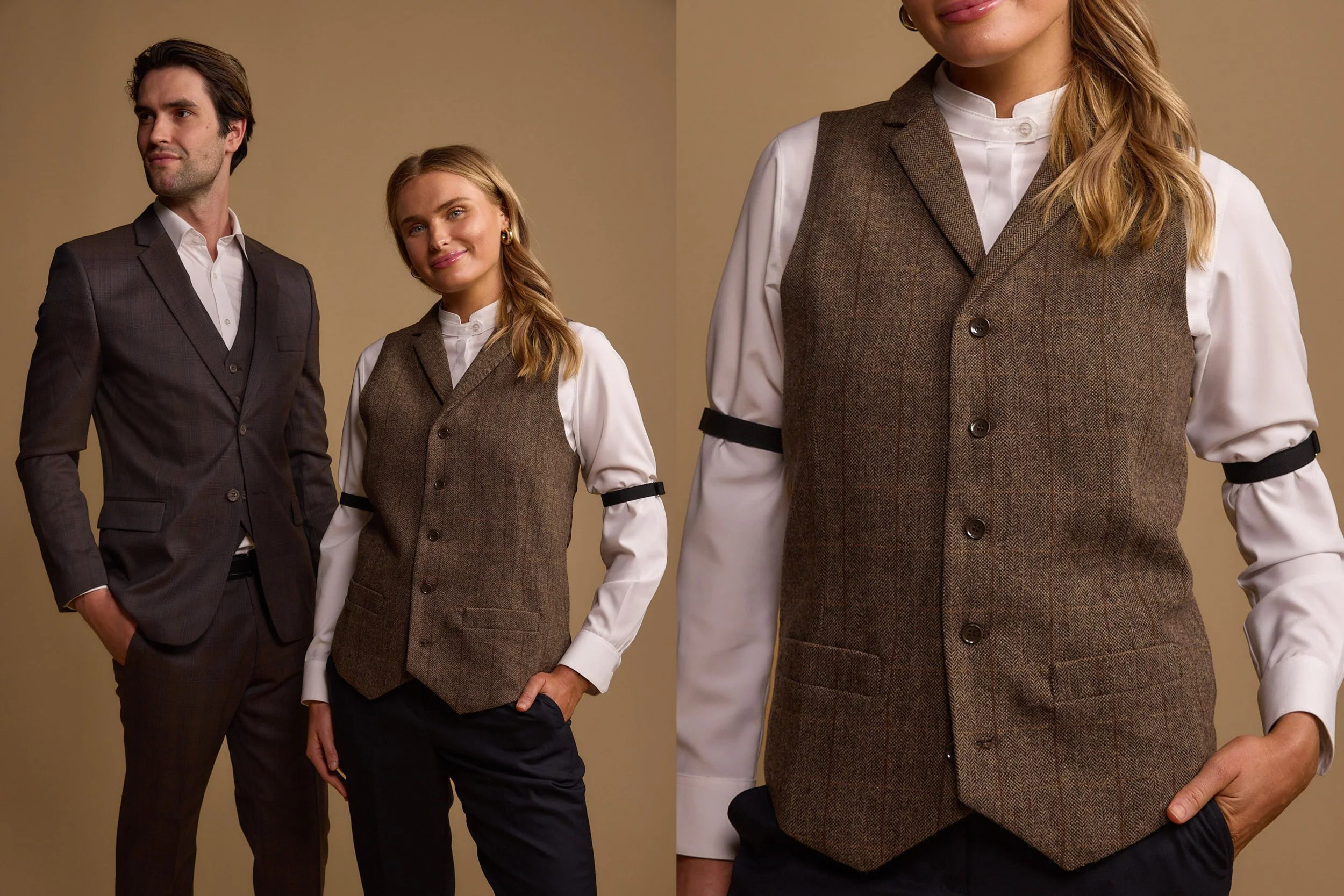
Front of house (FOH) and back of house (BOH) teams operate in very different environments, and their uniforms must reflect this.
Front of house staff are highly visible brand representatives. Their uniforms contribute directly to first impressions and guest perceptions. Back of house teams, while less visible, play a critical role in service delivery and require uniforms that prioritise durability, comfort, and functionality.
A successful uniform program acknowledges these differences while ensuring every role feels connected to the same brand story — a principle explored further in our approach to Hotel Uniform Design.
Front of House Uniform Design: Presentation and Brand Alignment
Front of house uniforms set the tone for the guest experience. Whether welcoming guests at reception, assisting at concierge, or serving in restaurants and bars, FOH staff uniforms must project confidence, professionalism, and brand clarity.
Key considerations include:
Tailoring that reflects the hotel’s positioning
Colours and finishes aligned with brand identity
Elevated fabrics that communicate quality
A polished, cohesive appearance across guest-facing roles
Design decisions at this level often reflect whether a hotel leans towards a luxury or lifestyle aesthetic — a distinction explored further in [Luxury or Lifestyle: Tailoring Hotel Uniform Design to Your Brand Identity].
Back of House Uniform Design: Function, Comfort, and Performance
Back of house teams work long shifts in demanding conditions. Uniforms must support movement, withstand frequent laundering, and remain comfortable throughout the day.
Effective BOH uniform design prioritises:
Durable, easy-care fabrics
Breathability and comfort
Practical construction for active roles
Consistency with the broader uniform collection
Fabric selection plays a major role here, particularly when balancing longevity with staff comfort — an area explored in detail in [Selecting Fabrics That Balance Luxury, Comfort, and Durability in Hotel Uniforms].
Creating Cohesion Across Roles and Departments
While FOH and BOH uniforms serve different purposes, they should never feel disconnected. Guests may not see every team member, but subconscious cues of consistency reinforce trust and professionalism.
Cohesive uniform programs use:
Shared colour palettes or design details
Complementary silhouettes across departments
Consistent branding elements
This approach ensures that every staff member, regardless of role, feels part of a unified team — strengthening internal culture and external brand perception.
Designing for Operational Efficiency and Scale
Hotels, particularly those operating across multiple properties, must consider how uniform programs scale. Designing FOH and BOH uniforms as part of a complete system simplifies ordering, onboarding, and long-term management.
Uniform collections that are thoughtfully planned from the outset support smoother [hotel uniform rollouts across multiple properties], reducing operational complexity while maintaining brand consistency.
Uniform Design That Supports the Guest Experience
When front of house and back of house uniforms are designed with equal care, the impact is felt throughout the guest journey. Confident staff, cohesive presentation, and functional garments all contribute to service that feels effortless and professional.
Ultimately, the distinction between FOH and BOH should be functional — not visual. Both play a vital role in shaping how guests experience your hotel, reinforcing the importance of uniforms as a strategic investment rather than a purely operational necessity.