
One Base Uniform, Multiple Venues: A Smarter Approach to F&B UNIFORMS
For operators managing more than one venue, the uniform question rarely has a simple answer.
A hotel with a lobby bar, a fine dining restaurant, and a poolside café. A hospitality group with three distinct concepts sharing a building. A resort where the spa team, the F&B floor, and the front office all occupy the same guest-facing space but need to look distinct from one another.
The instinct is often to build separate programs for each. Different garments, different colours, different procurement cycles, different stock holdings. It feels like the right solution — each venue gets its own identity but in practice it creates a logistical challenge that compounds over time. Multiple inventory lines to manage, multiple replacement cycles to track, onboarding that varies by role and outlet, and a budget that is being stretched across several programs rather than consolidated into one well-designed solution.
There is a smarter approach, and it starts with a base uniform.
What a Base Uniform Actually Means
A base uniform is the foundation garment — or combination of garments — that establishes brand consistency across your whole operation. It is typically a core pant or skirt and a base shirt or blouse in a neutral or brand-aligned colour. It is the constant in the equation. Everything else is a considered addition.
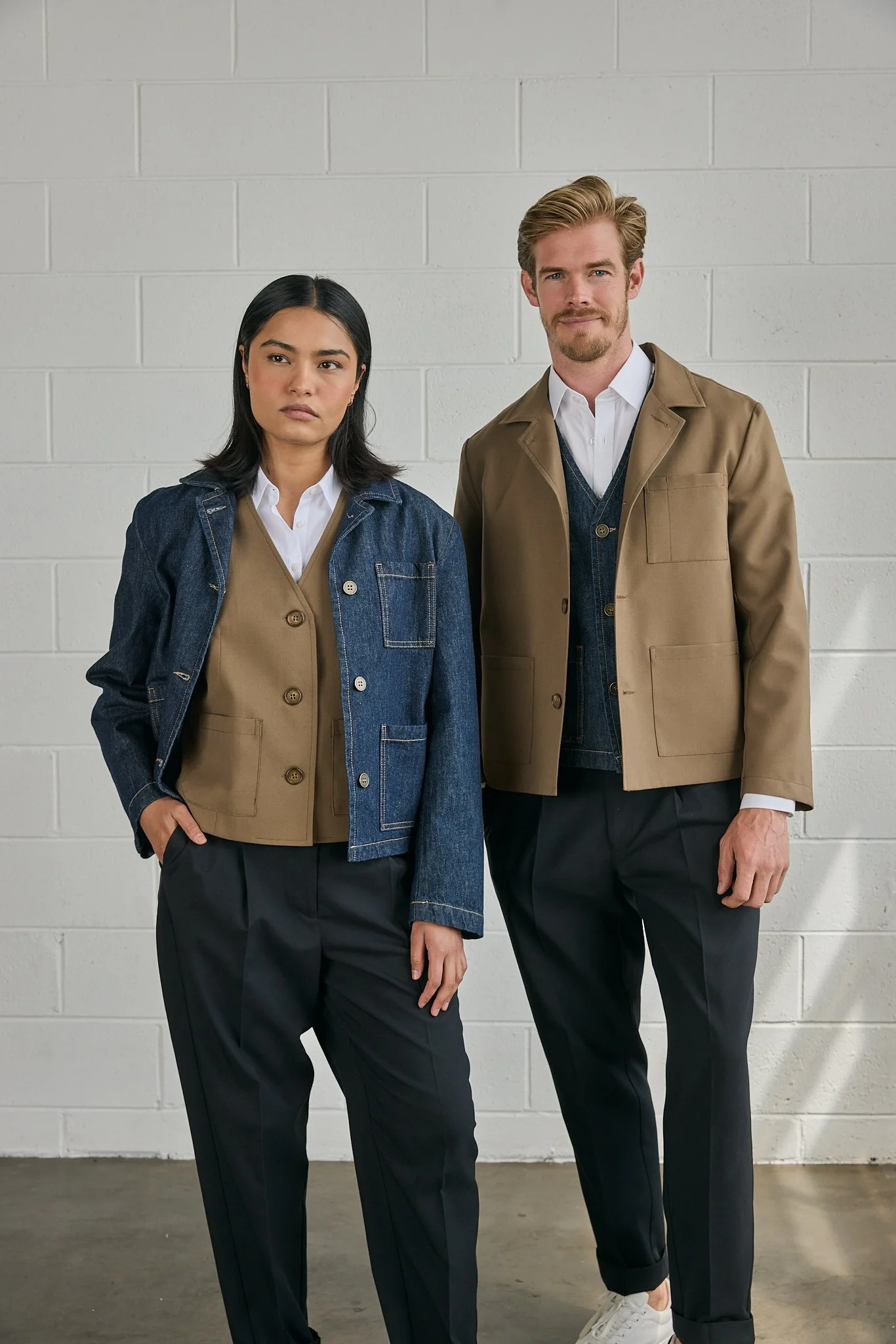
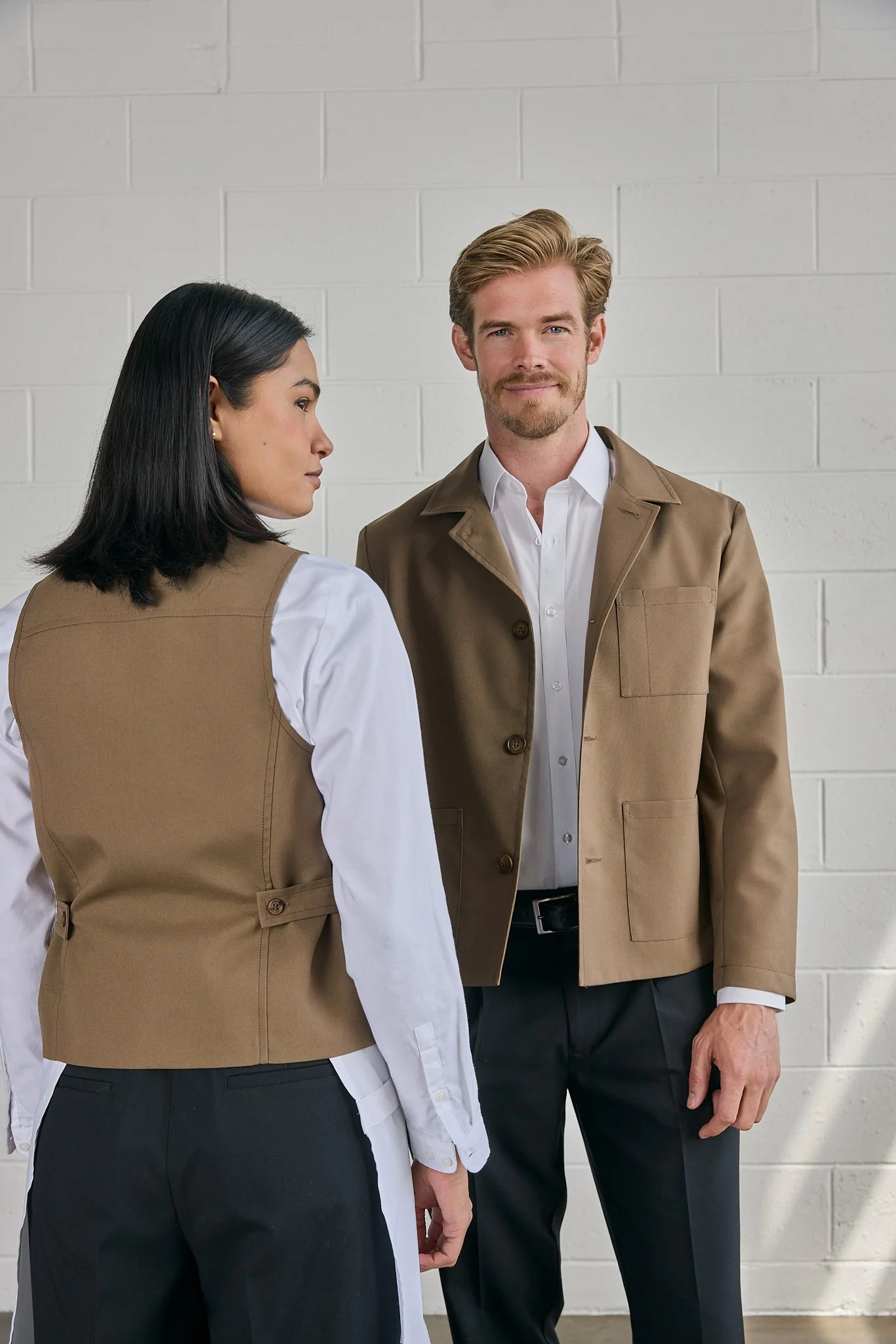
The base uniform does not erase the differences between your venues. It anchors them. When every team member across every outlet is drawing from the same core garment, you have consistency at the foundation. What happens above that — the outer layer, the accessory, the apron, the single colour variation in one piece — is where each venue's identity lives.
This is not a compromise. It is a design principle. The best bespoke and made-to-order programs are built this way deliberately, because the discipline of working from a shared foundation makes the additions more impactful, not less.
Differentiation Through Addition
Small changes carry significant visual weight when the foundation is right.
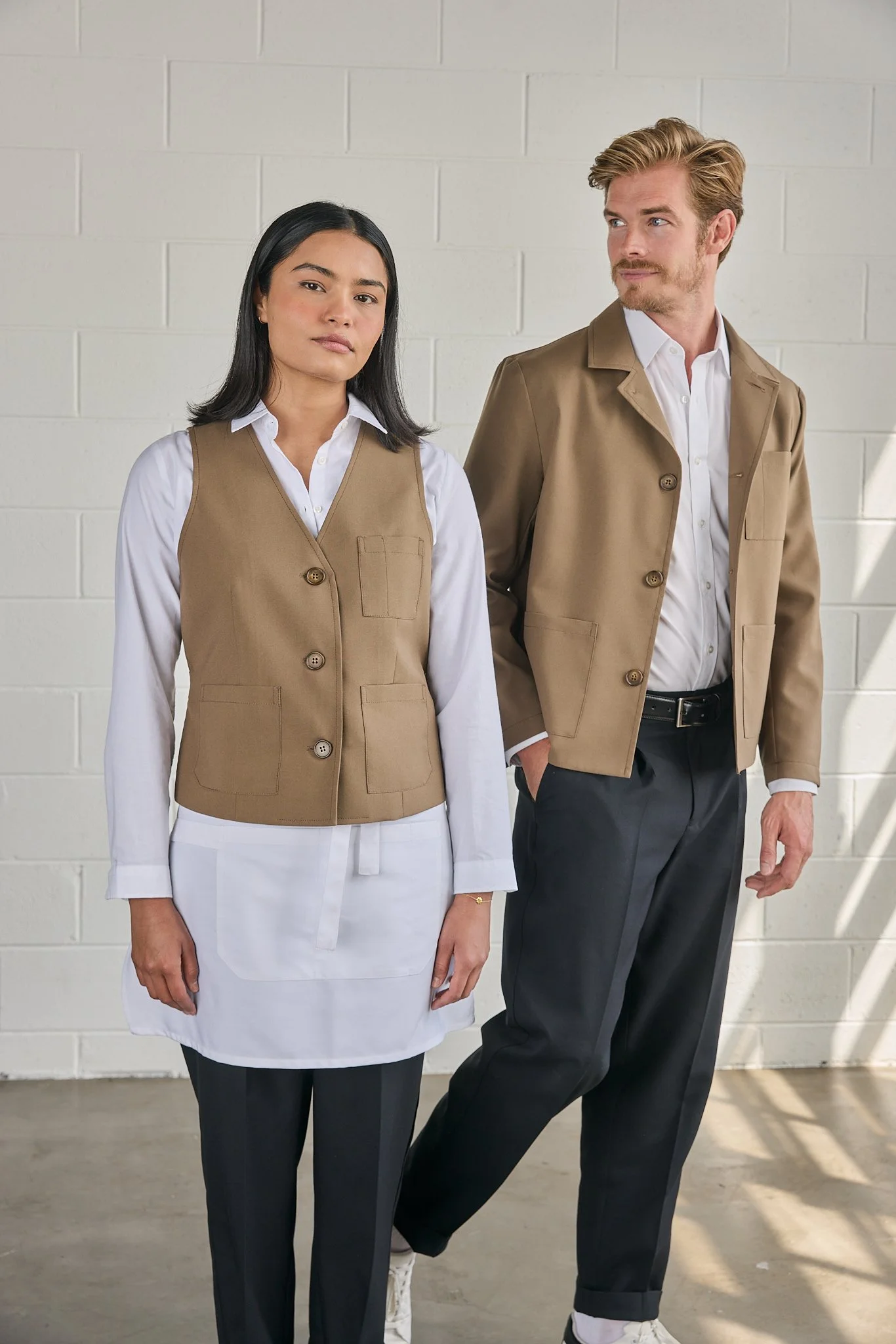
Consider a hotel with three distinct service environments. The front-of-house lobby team wears the base with a structured vest — the addition signals formality and polish without departing from the brand. The restaurant team layers a chore jacket over the same base — a slightly more relaxed silhouette appropriate to a dining environment. The bar team keeps the base alone, paired with a different apron that carries the bar's identity.
Three teams. Three distinct looks. One base garment in the inventory.
The additions — the vest, the jacket, the apron — are ordered in the quantities relevant to each team. They are not the whole wardrobe. They are the differentiating details within a shared system.
The same logic extends to day-to-evening transitions within a single venue. A layer added for dinner service, removed at lunch. The base remains constant; the presentation shifts. The team always looks appropriate for the moment without requiring a separate uniform for each service occasion, and without the operational complexity of managing a costume change mid-shift.
The Operational and Commercial Case
The design argument for a base uniform strategy is compelling. The business case is equally clear.
Inventory simplification. When your front-of-house team across three venues draws from one core garment, replacement procurement becomes straightforward. You are ordering one garment in a range of sizes, not three. Sizing consistency is maintained across the operation. Stock management is consolidated rather than fragmented.
Easier management. Replacements are drawn from a single pool. When a garment at one venue needs replacing, the process is the same as at every other venue — same supplier, same garment, same lead time. There is no institutional knowledge required about which venue uses which program. It is one system.
Budget efficiency. Consolidating into a base uniform program reduces overall spend without reducing quality. The investment is concentrated in one well-made garment rather than spread thinly across several. The differentiation pieces — vests, jackets, aprons — are ordered in smaller quantities and carry less financial weight than a full wardrobe rebuild per venue.
Onboarding ease. A new team member receives a base kit. Their role-specific additions are minimal and clearly defined. There is no confusion about which pieces belong to which outlet, and no complexity in managing transfers between venues. The system accommodates movement within the operation cleanly.
How This Works in Practice: The Multi-Venue Brief
The base uniform approach is most powerful when it is designed as a system from the outset — when the base garment is chosen with all venues in mind, and the differentiation additions are designed to work within that system rather than against it.
At PC Corporate, multi-venue briefs are a particular area of focus. The design consultation process for groups managing multiple outlets begins with the whole operation — mapping the service environments, the roles, the guest touchpoints, and the brand identity that needs to be felt across all of them. From that understanding, a base is selected and the differentiation strategy is built outward.
It is an approach we have applied across premium hospitality properties, where the challenge of maintaining visual consistency across distinct venues while preserving the identity of each space is exactly what the brief demands. The result is a uniform program that feels coherent from the guest's perspective and manageable from the operator's.
Where to Start
If you are currently managing separate programs across multiple venues and finding it complicated, the transition to a base uniform system does not need to happen all at once. A natural entry point is the next refresh cycle — using the opportunity of an existing program review to assess whether a consolidated approach could serve the operation better.
Questions worth working through with your uniform partner:
What do the base garments across your current programs have in common? Is there already a de facto standard that could be formalised and built on?
Which venues have the most overlap in team profile and service style? Those are the natural candidates for a shared base.
Where is the most complexity in your current replacement and procurement process? That is often where the consolidated approach delivers the quickest operational return.
If you are building a new program from scratch, the decision is simpler. Start with the base. Design the system. Make the additions deliberate.
The Standard Worth Working Toward
A uniform program that works across multiple venues is not one that looks identical everywhere. It is one that looks considered everywhere — where the consistency is felt in the quality and the cohesion, and the differences between venues are expressed through the details that actually carry meaning.
That is the standard a well-designed base uniform system delivers. And it is the standard your guests — whether they are visiting your lobby bar, your fine dining room, or your poolside café — deserve to experience.
If you are managing uniforms across more than one venue and want to explore a smarter approach, speak to the PC Corporate team.
Get in touch: info@pccorporate.com.au | 03 9687 0714