
Dressed for the Season: How F&B Teams Approach Winter Uniforms
Winter changes the hospitality experience before a single guest walks through the door.
The menu shifts. The lighting warms. The dining room stops being a pass-through and becomes a destination. Guests arrive with an intention to settle in — a long lunch, a slow dinner, an evening that earns itself. And the team that serves them is on show in a way that the brighter, breezier months rarely demand.
For F&B managers, it is the season to look critically at the uniform. Not just whether it is clean and consistent, but whether it belongs in the room. Whether it reflects the care being applied to everything else.
Why Winter Is a Uniform Moment
The seasonal shift that happens across hospitality — heavier linens on the tables, richer ingredients on the menu, candlelight replacing natural light — is a creative and commercial decision. It signals to guests that the venue is paying attention to the moment.
The uniform is the one element that often gets left behind.
When a dining room has evolved for winter and the team is still dressed for summer, the disconnect is subtle but real. Guests feel it even when they cannot name it. The presentation of the space and the presentation of the team are misaligned, and the experience is fractionally less than it should be.
Winter is a natural anchor for a uniform review. It does not require a full rebuild. What it does require is intention — a decision to make the team look as considered as everything else in the room.
The Layering Approach: Where to Start
Layering in a uniform context is not about adding bulk. It is about building a considered wardrobe that allows your team to move between the warmth of the kitchen pass and the cool of the dining floor without compromising how they look.
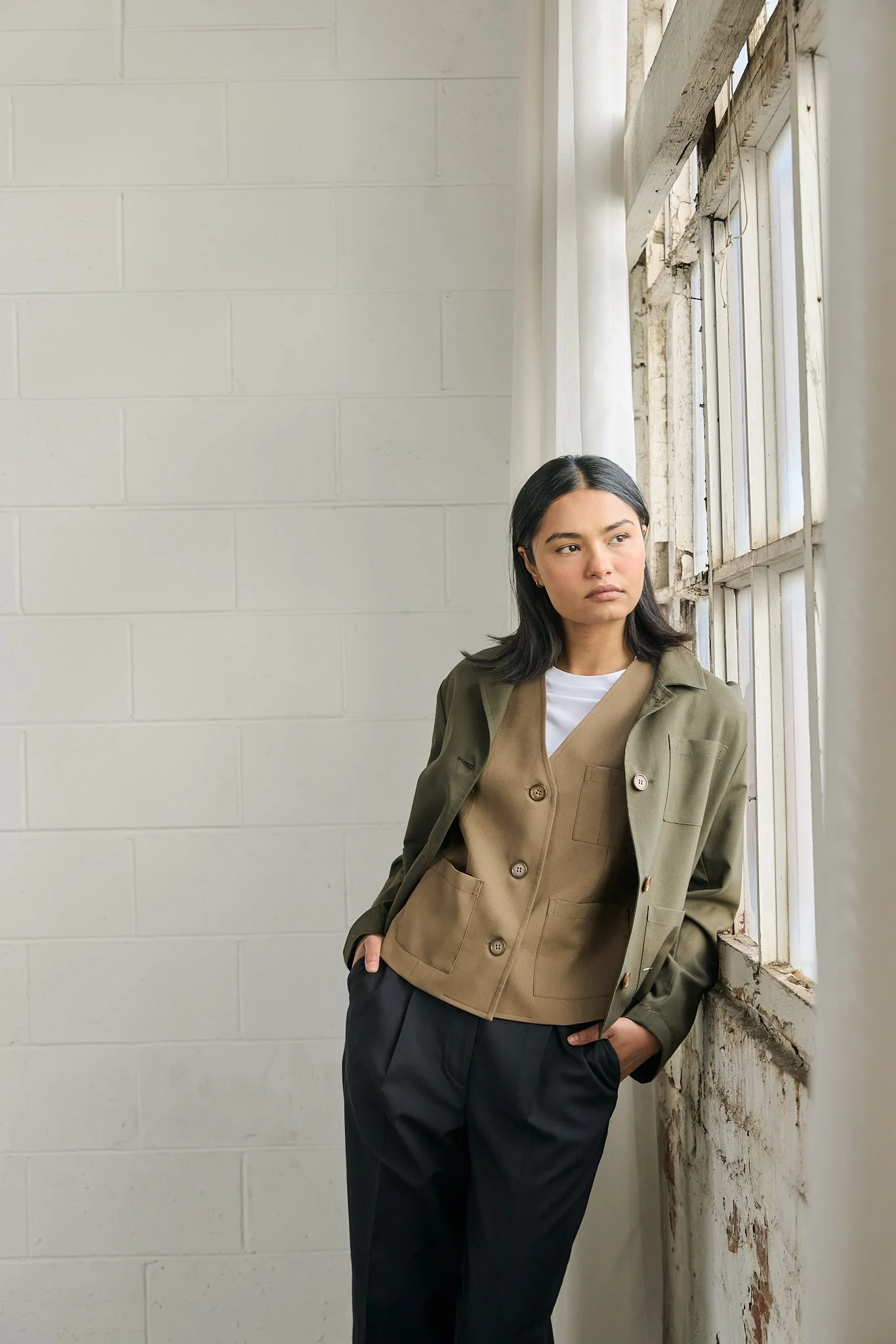
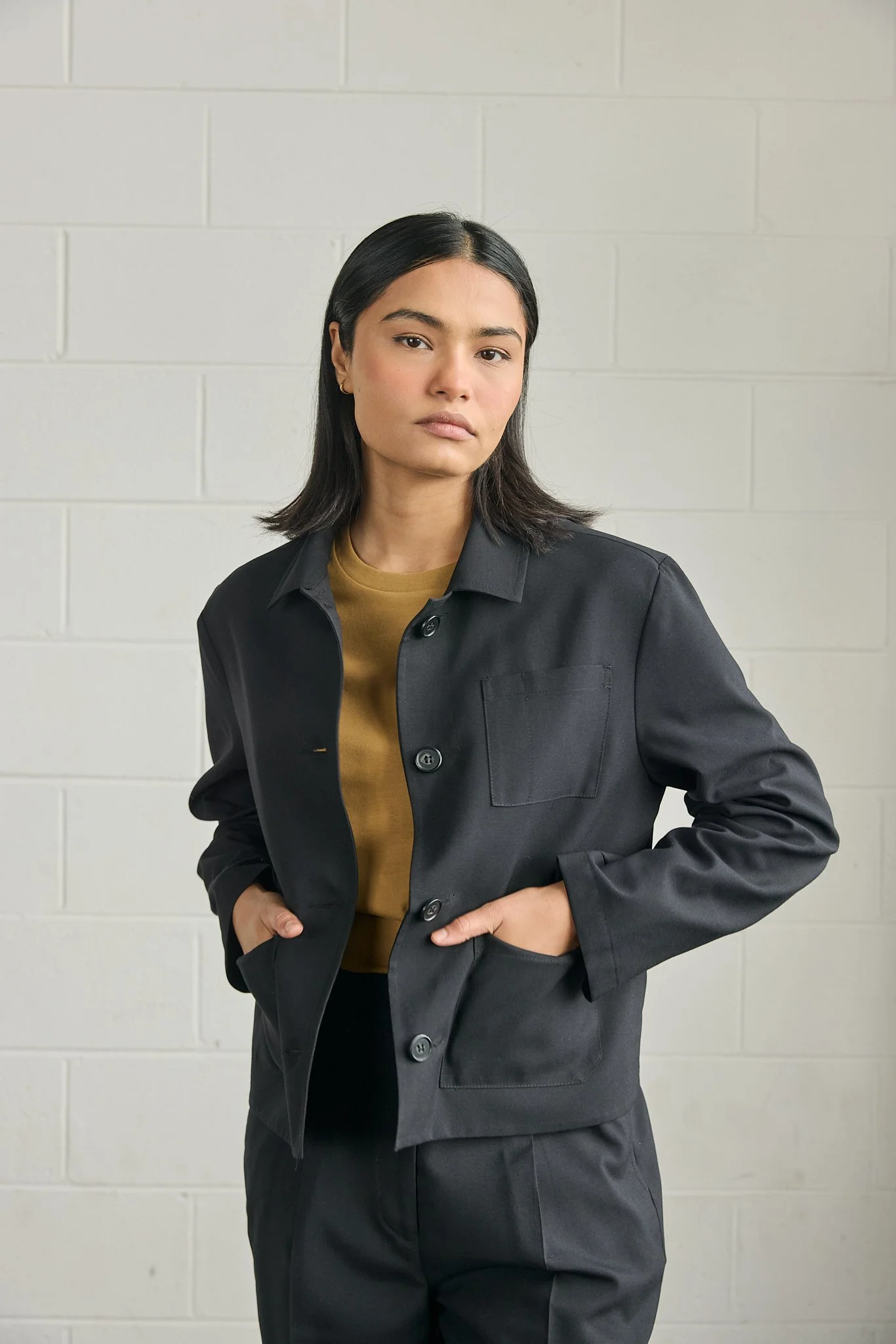
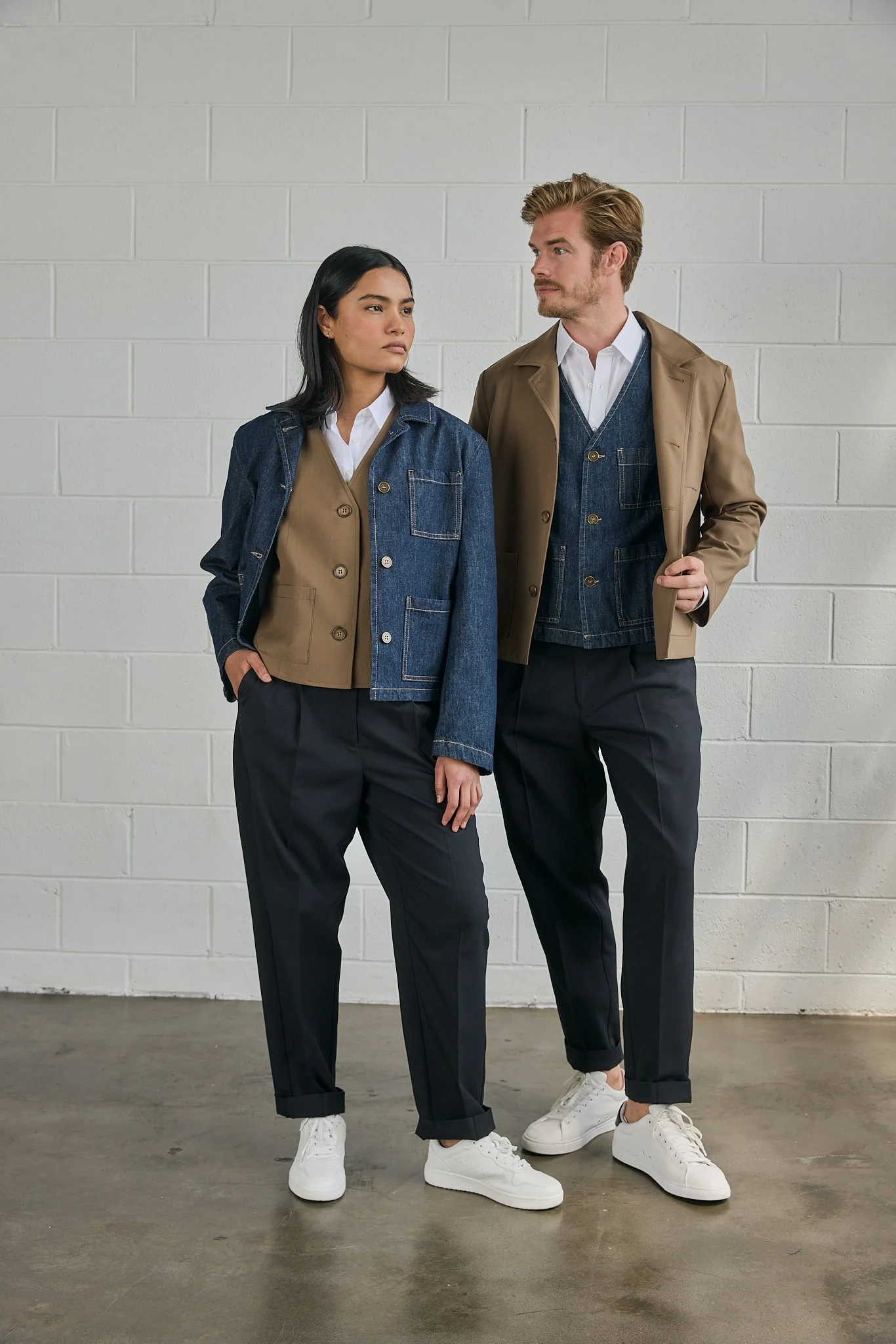
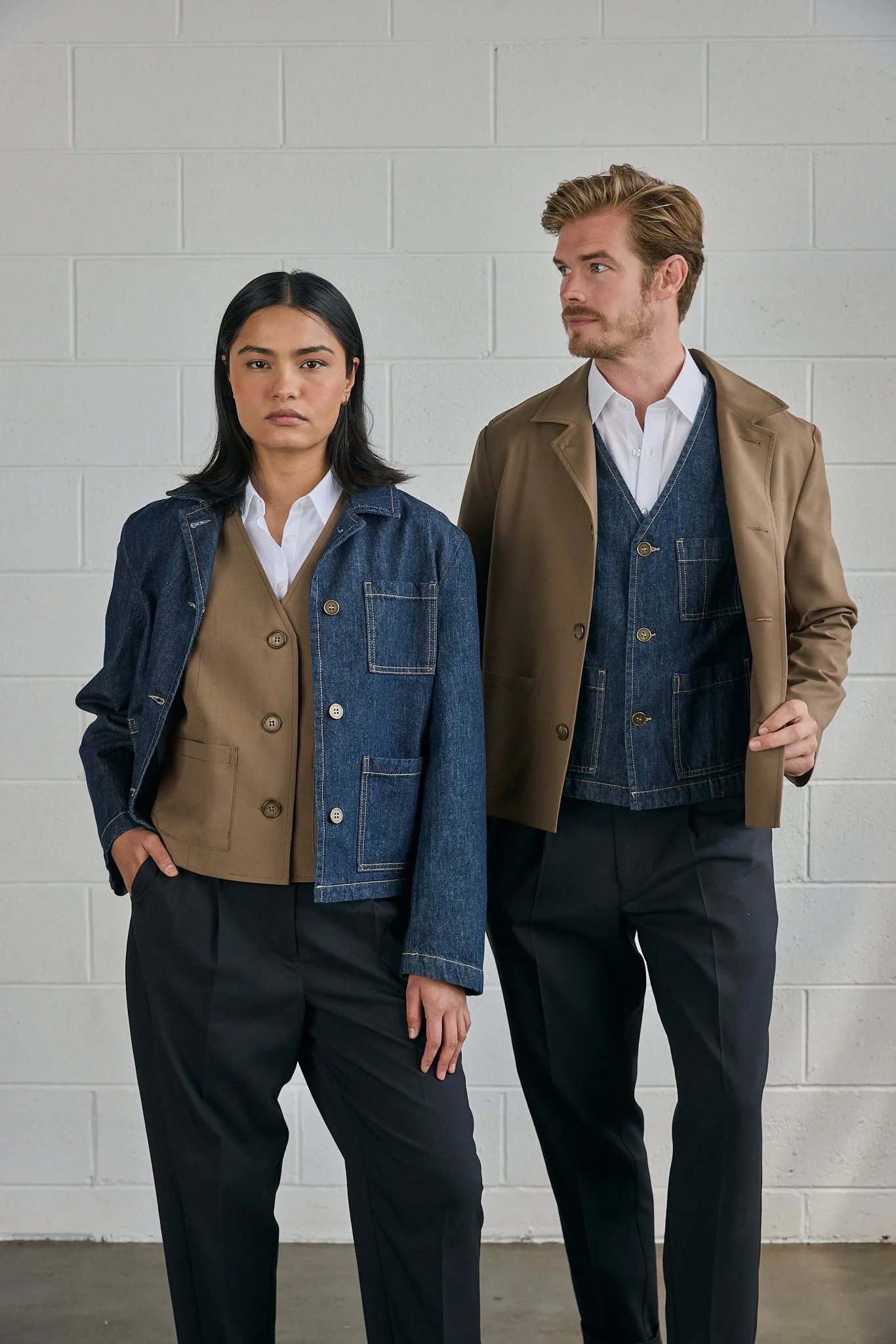
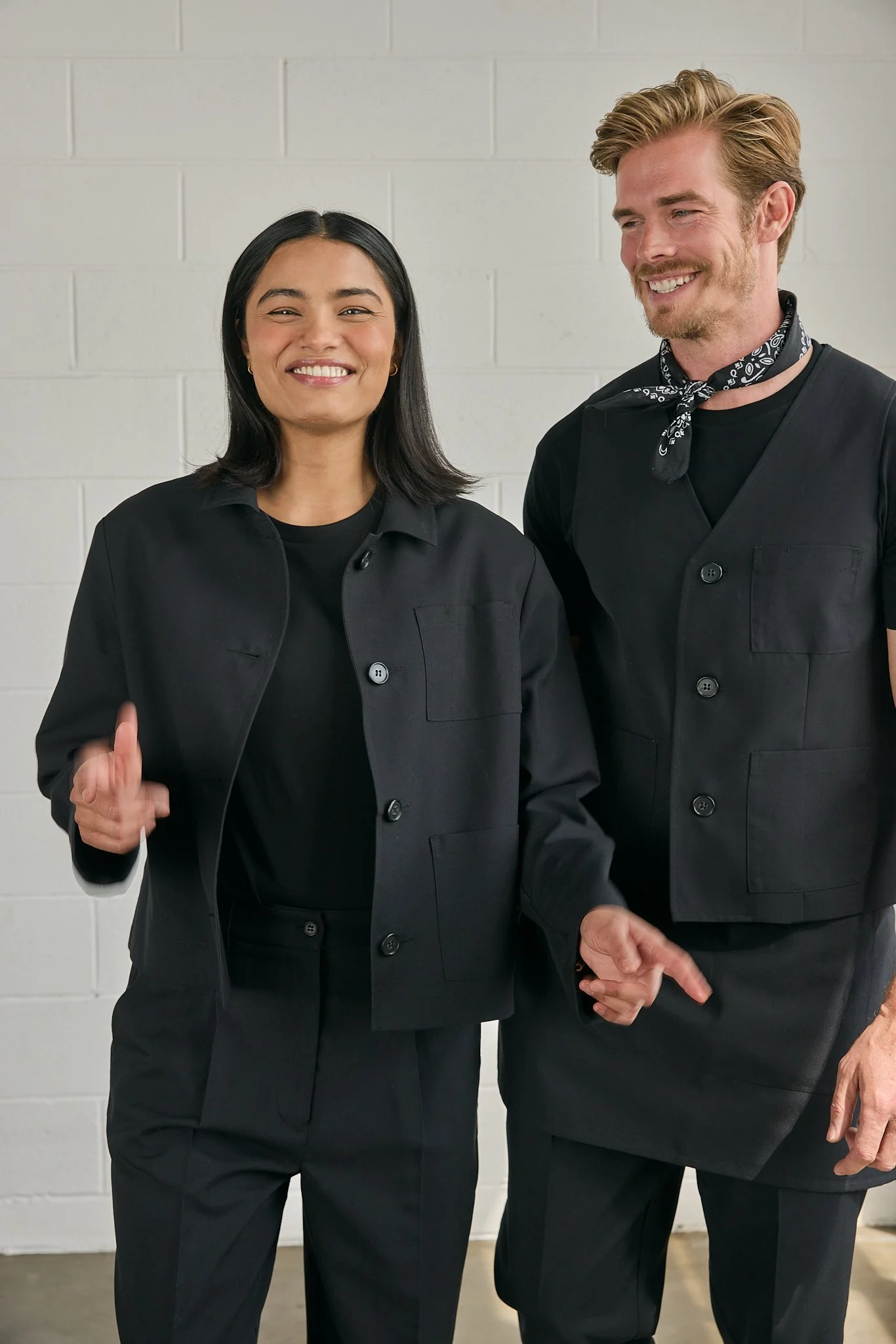
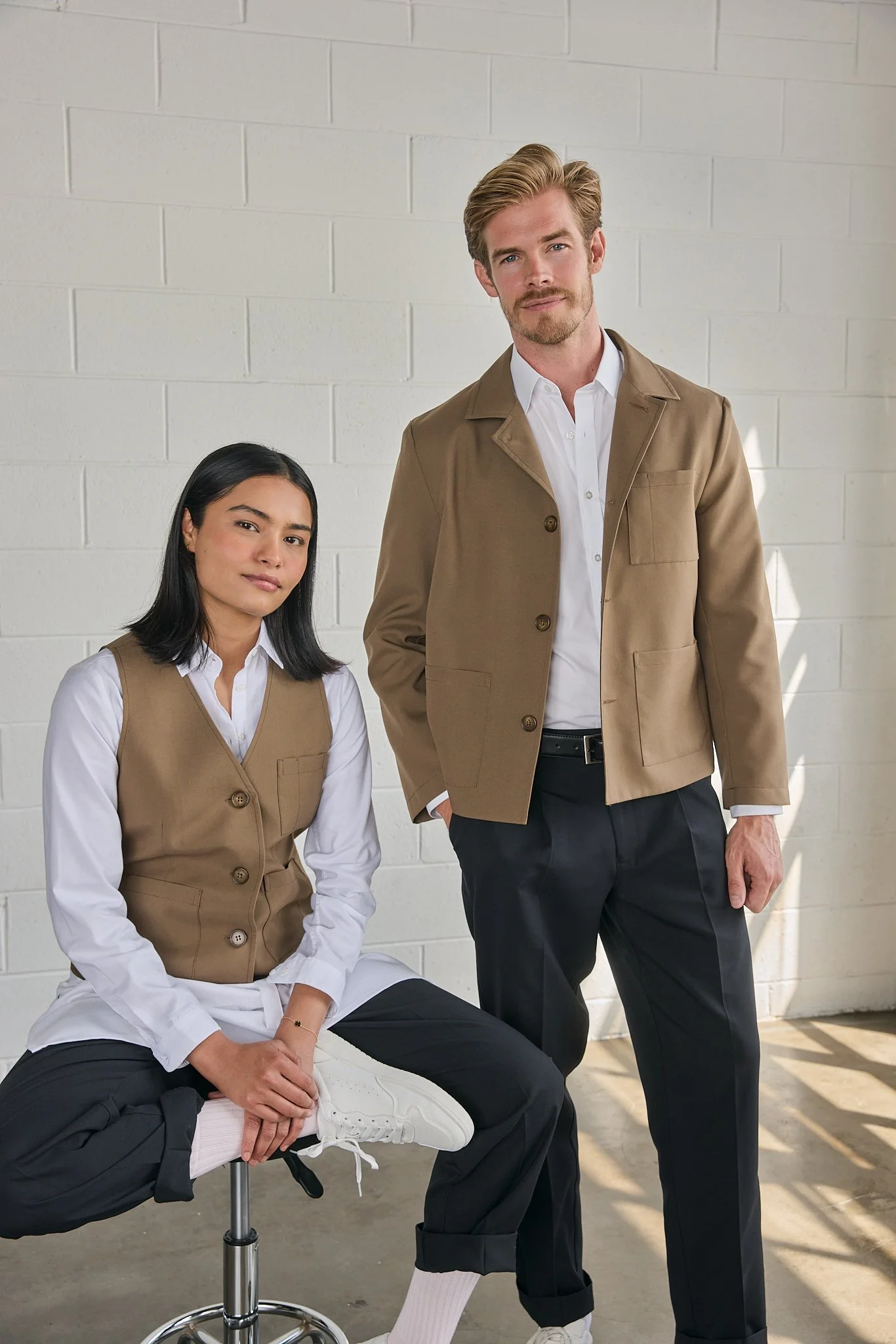
The simplest entry point is also the most effective: move from short sleeve to long sleeve as the seasonal base. From there, a structured outer layer — a chore jacket, a refined vest, a knit midlayer — adds intention to the silhouette and communicates that every detail of the guest experience has been thought through.
The functional case is clear. Floor staff move constantly between warm and cool environments throughout a service. A layering system that accommodates that movement — without requiring a full costume change or leaving someone visibly underdressed at the pass — is an operational asset.
The design case is equally compelling. A well-chosen outer layer adds visual depth and a sense of occasion. It elevates the team from dressed to considered. In a winter dining room, that difference matters.
Key layering pieces to consider:
A chore jacket in a structured fabric gives the team a polished silhouette that works from prep through to close. The Modern Chore Vest from the PC Corporate Made-to-Order Collection is a lighter-weight option that adds a layer without restriction — ideal for floor staff who need freedom of movement through a full service. Long-sleeve base shirts in performance fabrics provide warmth without weight and hold their appearance across a demanding shift.
The principle to keep front of mind: the base garment remains consistent. The layer is the seasonal addition. You are not replacing the wardrobe — you are extending it.
Winter Colour Trends: What the Season Calls For
The palette that reads as premium in summer — crisp whites, light neutrals, open tones — does different work in winter.
In the cooler months, depth and warmth carry the register. The colours F&B teams are moving toward reflect that shift: forest greens, warm burgundies, rich navies, deep taupes, chocolate browns. These are tones that hold their look through a dinner service in a way that a bleached white simply cannot. They complement the season's menu aesthetic. They read as deliberate.
This does not mean a full colour overhaul. For most venues, the smartest application of winter palette thinking is through the outer layer or accessories — keeping the base garment in a neutral that anchors the look while letting the added piece carry the seasonal colour.
A forest green vest over a white base. A deep navy chore jacket over a fitted black shirt. A burgundy apron layered into an otherwise neutral team wardrobe. These are targeted decisions that shift the whole register of the team's presentation without requiring a new base garment in every size and every role.
Practical Considerations for F&B Managers
A few things worth working through before making any decisions:
What can be extended versus replaced. In many cases, the existing base garment is sound. A seasonal layer and a colour addition is all that is needed to lift the uniform through the cooler months. Start there before considering a full review.
Lead times for made-to-order pieces. If you are planning seasonal updates to a bespoke or made-to-order program, factor in production lead times. We also have our Ready-to-Wear options available with off the shelf options available immediately.
Consistency across the team. Any seasonal change needs to be rolled out consistently — the same piece, the same colour, across every relevant team member. A partial update creates a disjointed look that undermines the intent. If the budget does not stretch to the full team, it is better to stage the rollout by role than to deploy inconsistently.
Durability through a service environment. Winter fabrics need to perform, not just look good at the start of a shift. Technical fabrications including heat-retaining options that maintain warmth without compromising movement are worth considering for roles that involve sustained physical activity.
A Uniform That Belongs in the Room
The best winter uniforms are not the ones that stand out. They are the ones that make the team feel completely at home in their environment, where the warmth of the colour, the weight of the fabric, and the structure of the silhouette all say that this venue takes its presentation as seriously as its menu.
That is the standard worth working toward.
If you are thinking about a seasonal update for your team — whether that is a single layering piece or a broader palette shift — speak to the PC Corporate team. We can help you identify the right approach for your current base uniform without requiring a full refresh.
Get in touch: info@pccorporate.com.au | 03 9687 0714