
Selecting Fabrics That Perform in High-Wear Bar and Restaurant Environments
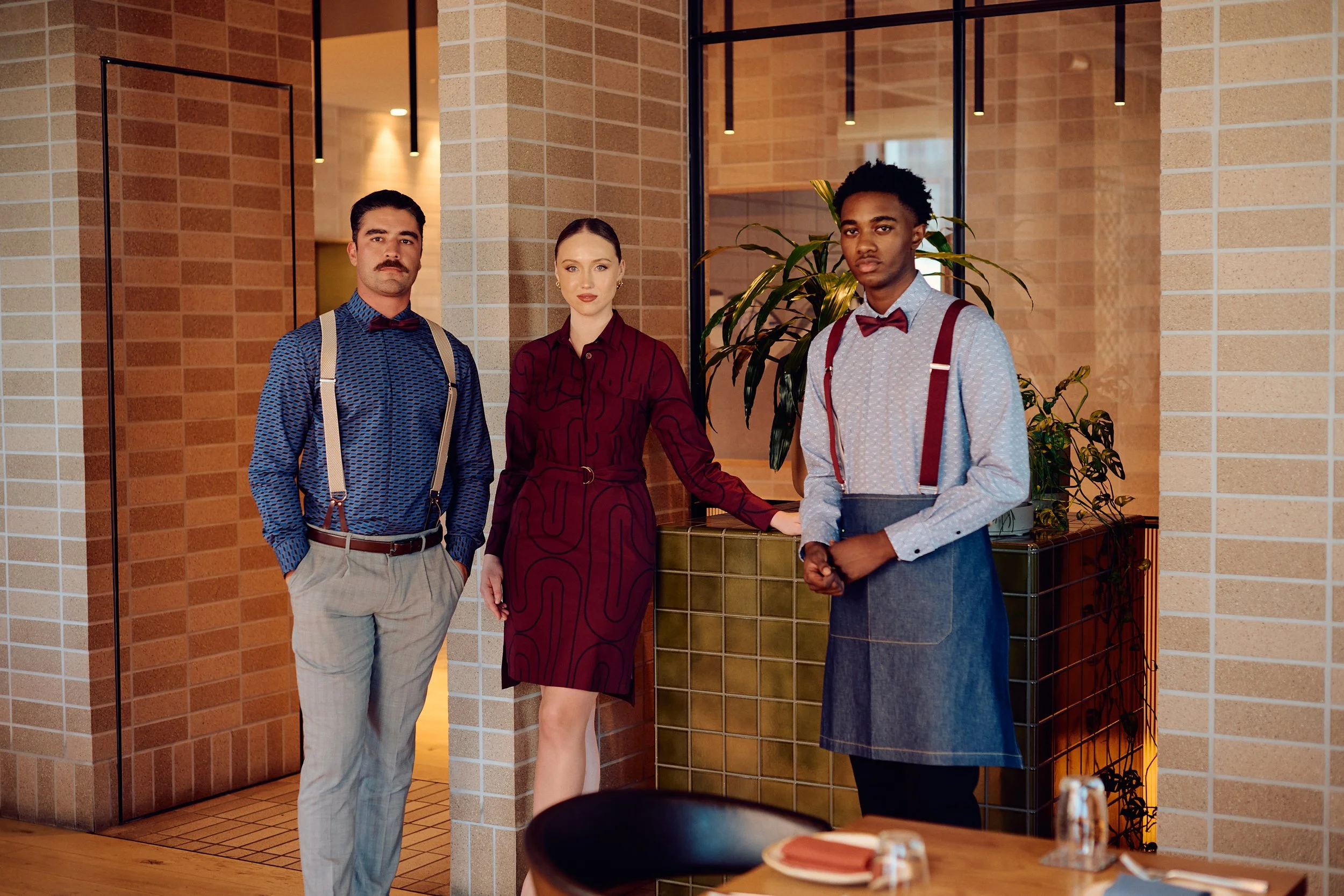
Why Fabric Choice Matters in Hospitality
In bars and restaurants, uniforms work as hard as the people wearing them. Long shifts, constant movement, heat, spills, and frequent laundering all place significant demands on hospitality garments.
While uniform design often begins with aesthetics, fabric selection is what determines whether a uniform truly performs. The right fabric supports comfort, durability, and presentation — while the wrong choice leads to premature wear, staff discomfort, and increased replacement costs.
Selecting fabrics that perform in high-wear hospitality environments is not just a technical decision; it’s a strategic one.
(Internal link → Hospitality Uniform Design pillar)
The Unique Demands of Bar and Restaurant Environments
Hospitality uniforms operate under conditions few other workwear categories face. Bars and restaurants combine physical intensity with close guest interaction, requiring fabrics that can balance appearance with performance.
Uniform fabrics must withstand:
Long hours of standing and movement
Heat from kitchens and bar equipment
Spills, stains, and frequent washing
High-rotation staff usage
This makes fabric choice one of the most important decisions in any hospitality uniform program.
Key Fabric Performance Criteria for Hospitality Uniforms
Durability and Longevity
High-wear environments demand fabrics that can endure repeated laundering without losing shape, colour, or structure. Poor-quality fabrics quickly show signs of wear, undermining brand presentation.
Durable fabrics:
Maintain a polished appearance over time
Reduce replacement frequency
Deliver better cost-per-wear value
Longevity is especially important for multi-venue groups where consistency matters across locations.
(Internal link → Seamless Uniform Rollouts Across Multi-Venue Hospitality Groups)
Breathability and Comfort
Bars and restaurants are physically demanding environments. Breathable fabrics help regulate body temperature, reduce discomfort, and support staff focus during long shifts.
Comfort directly impacts:
Staff confidence
Energy levels during service
Overall guest interaction
When staff are comfortable, service feels more natural and attentive.
Ease of Care and Maintenance
Hospitality uniforms are laundered frequently. Fabrics must be easy to care for and resilient enough to handle industrial washing processes.
Key considerations include:
Colourfastness
Resistance to shrinkage
Quick drying
Minimal ironing requirements
Low-maintenance fabrics reduce operational complexity and ensure uniforms remain service-ready.
Matching Fabric Choice to Role Requirements
Not all hospitality roles require the same fabric solution. Effective uniform programs tailor fabrics to role-specific demands while maintaining brand cohesion.
Front-of-House Fabrics
FOH uniforms should prioritise:
Lightweight construction
Breathability
Clean drape and structure
These fabrics support presentation and comfort while allowing staff to move freely in guest-facing roles.
(Internal link → Designing Uniforms for Front of House and Back of House in Hospitality)
Back-of-House Fabrics
BOH uniforms require:
Heavier-weight fabrics
Reinforced seams
Enhanced heat tolerance
Durability and safety are critical, but comfort remains essential to support long, physically demanding shifts.
Balancing Style with Performance
A common misconception is that performance fabrics compromise aesthetics. In reality, modern hospitality fabrics are designed to deliver both.
High-quality performance fabrics:
Retain structure and colour
Offer refined textures
Support tailored silhouettes
This allows uniforms to look polished while performing under pressure.
(Internal link → Expressing Brand Personality Through Hospitality Uniform Design)
Fabric Choice and Brand Perception
Guests may not consciously analyse uniform fabrics, but they notice the result. Crisp, well-maintained uniforms reinforce professionalism and attention to detail.
Over time, consistent presentation builds trust and strengthens brand perception — particularly in competitive hospitality markets.
(Internal link → The Role of Hospitality Uniforms in Shaping Guest Experience)
Sustainability Considerations in Fabric Selection
Sustainability is increasingly important in hospitality, but it must be approached holistically.
Sustainable fabric choices consider:
Ethical sourcing
Longevity and durability
Reduced replacement cycles
A fabric that lasts longer and performs better is often more sustainable than one that requires frequent replacement.
(Internal link → Sustainable Hospitality Uniforms: Style, Durability, and Responsibility)
Cost Per Wear: A Smarter Way to Measure Value
Rather than focusing solely on upfront cost, hospitality businesses benefit from evaluating uniforms based on cost per wear.
Higher-quality fabrics:
Reduce replacement frequency
Maintain brand consistency
Lower long-term operational costs
This approach aligns budget considerations with performance and sustainability goals.
Common Fabric Mistakes in Hospitality Uniform Programs
Some of the most common pitfalls include:
Choosing fabrics based on appearance alone
Ignoring laundering requirements
Selecting fabrics unsuitable for heat or movement
Prioritising short-term savings over durability
Avoiding these mistakes ensures uniforms perform as intended throughout their lifecycle.
Fabric as the Foundation of Performance
In high-wear bar and restaurant environments, fabric selection underpins everything — comfort, durability, presentation, and sustainability.
When fabrics are chosen thoughtfully and aligned with role requirements, hospitality uniforms become reliable tools that support staff performance and reinforce brand standards, shift after shift.
(Internal link → Hospitality Uniform Design pillar)
Looking for hospitality uniforms built to perform in high-wear environments?
Speak with PC Corporate about fabric-led uniform solutions designed for bars, restaurants, and multi-venue hospitality groups.
